
Are Skin Friend Products Safe for Babies? A Research‑Based Perspective
My name is Raine, and I am a health and medical researcher currently supporting premature infant nutrition as a Research Assistant at the South Australian Health and Medical Research Institute (SAHMRI). My work places me in neonatal and paediatric environments every week, and I often meet families navigating the early challenges of newborn health — including skin concerns like dryness, irritation, and eczema‑like symptoms.
On January 5th, while working at a hospital, I spoke with a new mother whose baby was showing patches of dryness and irritation on the arms and legs. The clinicians she had spoken to earlier recommended products like Vaseline (petroleum jelly) and Epaderm (paraffin‑based). These products are commonly used in clinical settings, but they don’t always absorb easily into the skin, and many parents prefer gentler, plant‑based alternatives — especially for newborns whose skin barrier is still developing.
This conversation reminded me how important it is for caregivers to understand the unique needs of newborn skin, and why choosing gentle, low‑irritant products matters.
Understanding Newborn Skin: A Developing First Line of Defence
Babies are newly born into the world — literally. Their immune systems are adjusting to the environment, and their skin barrier (the body’s first line of defence) is still maturing. This means:
- Their skin loses moisture more quickly
- They are more sensitive to environmental dryness
- Their microbiome is still forming
- Their immune responses are still learning what is safe and what is not
Living in Adelaide — a temperate but often dry climate — adds another layer to consider. Environmental dryness can worsen skin irritation, especially in families with naturally drier skin types. In this case, the family appeared to be of African descent, and melanin‑rich skin can sometimes require more intentional moisturisation and hydration support.
These factors matter. They shape how we care for newborn skin and what products may be more suitable.
Hydration, Environment, and Gentle Support
Before even discussing topical products, it’s important to consider the whole environment:
1. Hydration Through Diet (for breastfeeding parents and older infants)
Hydrating foods can support overall moisture balance. 1, 2, 3, 5 However, it is imperative to consider the appropriate age group.
Water
Small amounts of water can be introduced after 6 months, alongside complementary foods. 4, 6
Cucumber, Watermelon, Sweet Potato, Carrot, Celery, Banana
These are all fruits or vegetables. Scientific guidelines 4, 6 state that all fruits and vegetables may be introduced at around 6 months, as long as they are prepared in safe textures (pureed, mashed, or soft‑cooked). Celery should be pureed or cooked until soft due to choking risk. These foods contain water, electrolytes, and nutrients that support healthy skin. 1, 2, 3, 5
2. Humidifiers at Home
A humidifier can add moisture back into the air — especially helpful in dry climates like Adelaide.
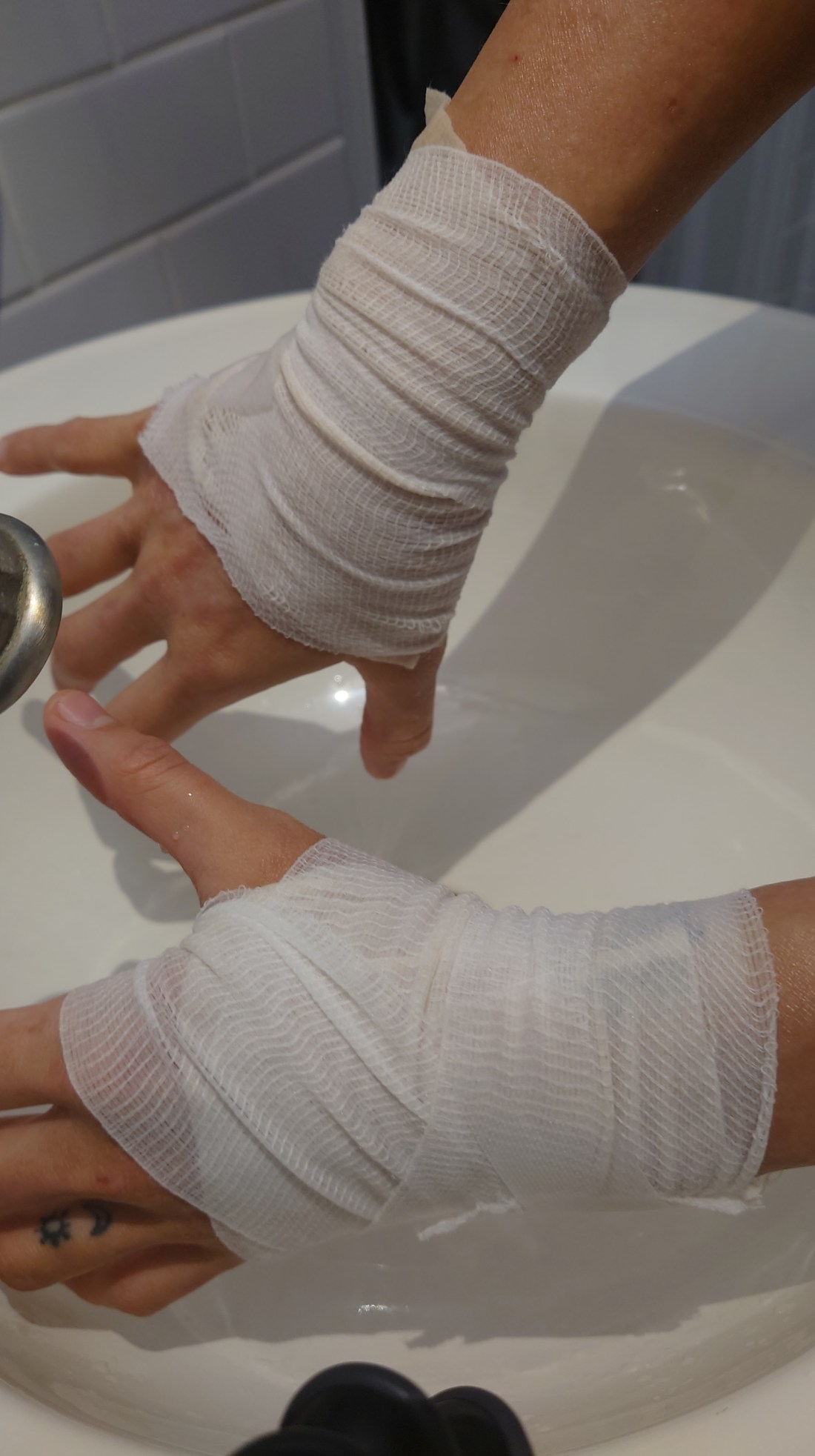
3. Wet Wraps
Wet wrapping is a gentle technique used to help lock moisture into the skin after applying a cream or ointment. It can help soothe dryness and support hydration. 7
4. Infant Massage
Growing up exposed to traditional Korean, Chinese, Japanese, Filipino, and Thai medicine, I learned early on the value of massage for circulation, lymphatic flow, digestion, and overall wellbeing.
There is research showing that digestive discomfort and constipation can be associated with skin irritation in some children. Gentle abdominal massage may support digestion and comfort — and for newborns, this kind of nurturing touch can also support bonding and relaxation.
Massage can also support healthy musculoskeletal development, including helping prevent issues like knee valgus (knock knees) as babies grow.
Where Skin Friend Products Fit In
Skin Friend products are formulated to be low‑irritant, gentle, and free from common additives that many parents prefer to avoid. While every baby is different, these products are designed with sensitive skin in mind.
Here’s how they fit into a holistic, gentle approach:
🌿 Skin Friend AM Activated Multi (for older children and adults)
This is a gut‑supporting supplement that can be mixed with water. Since gut health and skin health are closely connected, some families find this helpful. Note: Always check age suitability and speak with a healthcare professional before giving any supplement to a child.
🧴 Eczema Friend (Topical)
Contains dexpanthenol, a well‑known ingredient used to support skin hydration and barrier repair. It can help soothe dryness and support the skin’s natural healing processes.
🧂 Wonder Zinc (Topical)
Uses seaweed‑derived zinc, which is gentle and supports skin repair. Zinc‑based creams are commonly used for sensitive skin, including in nappy care.
These products offer an alternative to petroleum‑based or paraffin‑based moisturisers for parents who prefer plant‑derived or low‑irritant options.
A Holistic View of Baby Skin Care
Caring for newborn skin is not just about what you apply topically. It’s about:
- Hydration
- Environment
- Gentle touch
- Gut comfort
- Climate
- Cultural understanding
- And choosing products that align with your values
Skin Friend products can be part of a gentle, supportive routine for babies with sensitive skin — especially for families seeking alternatives to heavier, petroleum‑based products.
If You’d Like Support
If you want guidance on supporting your child’s skin or managing your own chronic skin concerns through lifestyle, nutrition, and gentle routines, I offer personalised coaching services.
Contact me today to begin your journey toward healthier skin and a more supported lifestyle.
Reference List
- Fewtrell, M., Bronsky, J., Campoy, C., Domellöf, M., Embleton, N., Fidler Mis, N., Hojsak, I., Hulst, J., Indrio, F., Lapillonne, A., Molgaard, C., van Goudoever, J., & ESPGHAN Committee on Nutrition. (2017). Complementary feeding: A position paper by the European Society for Paediatric Gastroenterology, Hepatology, and Nutrition (ESPGHAN). Journal of Pediatric Gastroenterology and Nutrition, 64(1), 119–132. https://doi.org/10.1097/MPG.0000000000001454
- Forestell, C. A. (2017). Flavor perception and preference development in human infants. Annals of Nutrition and Metabolism, 70(3), 17–25. https://doi.org/10.1159/000478757
- Heyman, M. B., & Abrams, S. A. (2017). Fruit juice in infants, children, and adolescents: Current recommendations. Pediatrics, 139(6), e20170967. https://doi.org/10.1542/peds.2017-0967
- National Health and Medical Research Council. (2013). Infant feeding guidelines: Information for health workers. NHMRC. https://www.nhmrc.gov.au/about-us/publications/infant-feeding-guidelines-information-health-workers
- Schwartz, C., Scholtens, P. A., Lalanne, A., Weenen, H., & Nicklaus, S. (2011). Development of healthy eating habits early in life. Review of the evidence and current recommendations. Annals of Nutrition and Metabolism, 58(2), 15–25. https://doi.org/10.1159/000324567
- World Health Organization. (2023). Complementary feeding: Guiding principles for feeding breastfed and non‑breastfed children 6–23 months of age. WHO Press. https://www.who.int/publications/i/item/9789240078828
- Royal Children’s Hospital Melbourne. (n.d.). Wet dressings for eczema [Clinical fact sheet]. https://www.rch.org.au/uploadedfiles/main/content/derm/wet_dressings_eczema.pdf
 Artist & Academic