

Why Picking Up These Books Is a Must for the New Year
As the New Year begins, it’s tempting to chase the latest health trend. But sustainable change happens when you take your health into your own hands by reading, researching, and experimenting to learn what your unique body needs. Two resources I recommend starting with are The Healthy Skin Kitchen and The Eczema Detox by nutritionist Karen Fischer, founder of Skin Friend. 16, 17
These books don’t offer a one‑size‑fits‑all plan. They will teach you how to build skin health from the inside out using practical, evidence‑guided nutrition strategies based on ingredients commonly available in Western/Australian diets.Noting that some ingredients may not be native or readily available in all parts of the world.
What Each Book Does and Who It’s For
The Healthy Skin Kitchen
This book is a comprehensive guide to everyday, allergy‑friendly meals designed to support the gut-skin connection, with options that can be tailored (low histamine, low salicylate, gluten‑free, dairy‑free, vegan, autoimmune‑paleo). It’s ideal if you want a flexible, delicious framework for nourishing skin, stabilizing inflammation, and rebuilding barrier health through food and lifestyle.16, 17
The Eczema Detox
If you live with eczema – and often with overlapping sensitivities such as rosacea or psoriasis – this book goes deeper into targeted elimination and re‑introduction strategies, including low‑histamine and low‑salicylate pathways, to help you identify triggers and calm flares. Recent evidence suggests a subset of people with atopic dermatitis may benefit from reducing naturally occurring food chemicals (histamine, amines, salicylates), although higher‑quality trials are still needed – making a structured, supervised approach particularly valuable. 10, 11
Why Nutrition Matters (Far Beyond “What Cream Should I Use?”)
Your skin reflects internal physiology is a principle deeply rooted in Traditional Chinese Medicine and Ayurveda, where the skin has long been viewed as a visible map of internal balance, digestion, stress, and systemic health. For thousands of years, these traditions have linked skin conditions to the gut, liver, sleep, emotional state, and environmental exposures.
What’s remarkable is that contemporary Western medicine, once focused primarily on topical or symptom‑level treatment, is now rapidly converging on the same understanding. Advances in microbiome science, psychodermatology, immunology, and lifestyle medicine are validating what these ancient systems observed: the skin is not an isolated organ but a dynamic reflection of whole‑body physiology. 18
That includes the gut microbiome (trillions of organisms that modulate immunity, barrier function, metabolism, and inflammatory signaling) and its bidirectional crosstalk with the skin – often referred to as the gut-skin axis. Dysbiosis has been associated with atopic dermatitis severity, and microbiome‑modulating approaches (diet, prebiotics/probiotics/postbiotics) are increasingly researched as adjuncts to care.5,6
A 2023 Mendelian randomization study reported potential causal links between specific gut taxa and AD risk (some protective, others associated with higher risk), reinforcing that gut composition can meaningfully intersect with skin inflammation.5
Narrative and mechanistic reviews similarly describe how gut microbes influence cutaneous immunity via short‑chain fatty acids, TLR‑NF‑κB signaling, and regulatory cytokines, offering pathways by which dietary patterns can steer inflammatory tone.7
The Gut-Brain Axis: Mood, Motivation, and Healing
Nutrition impacts not only your skin but also mood and stress responses through the gut-brain axis. Dysbiosis and diet influence neurotransmitters (serotonin, GABA), HPA‑axis regulation, and systemic inflammation – factors linked to anxiety and low mood, both of which can derail health routines. Reviews in Molecular Psychiatry and Nutrients highlight mechanisms and early trial data suggesting that diet and targeted microbiome interventions may modulate mood and cognition.8
This matters because better mood and sleep hygiene make it easier to adhere to anti‑inflammatory nutrition plans long enough to see results.8
Sleep: The Forgotten Skin Intervention
Sleep is a powerful lever for skin health. Disrupted or insufficient sleep raises inflammatory markers (e.g., IL‑6, CRP), disturbs cortisol/melatonin rhythms, impairs barrier function and repair, and worsens pruritus – the fuel for dermatologic flares. Clinical reviews and experimental studies link poor sleep with increased transepidermal water loss, altered cytokine patterns, and reduced collagen synthesis – all relevant to eczema, psoriasis, and rosacea.10, 11
A recent dermatology study found that short‑term sleep loss can measurably change biophysical parameters of the skin barrier, while integrative reviews describe bidirectional relationships between sleep quality and inflammatory dermatoses. In short: nutrition + sleep work together to lower systemic noise that keeps the skin reactive. 12
Where Pharmaceuticals Fit, and Why a Nutrition Pathway Is Worth It
Pharmaceuticals can be essential, and for many people, topical corticosteroids safely reduce inflammatory activity when used as directed. However, long‑term or improper use carries risks, including the controversial, under‑researched entity known as Topical Steroid Withdrawal (TSW), which regulators now explicitly warn about. Evidence summaries from the UK MHRA and joint statements by eczema societies acknowledge patient‑reported withdrawal reactions and call for careful, individualized use.14
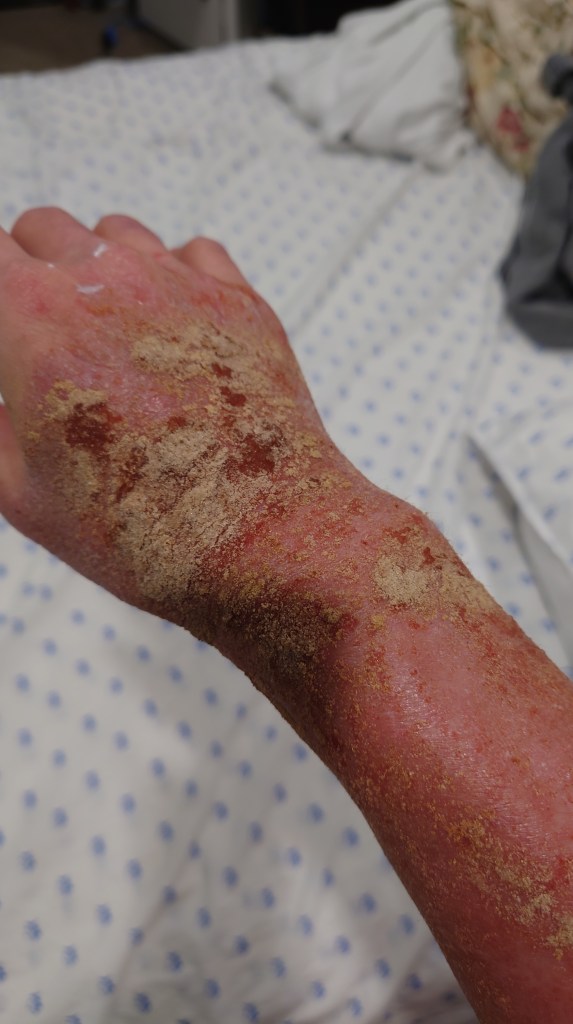
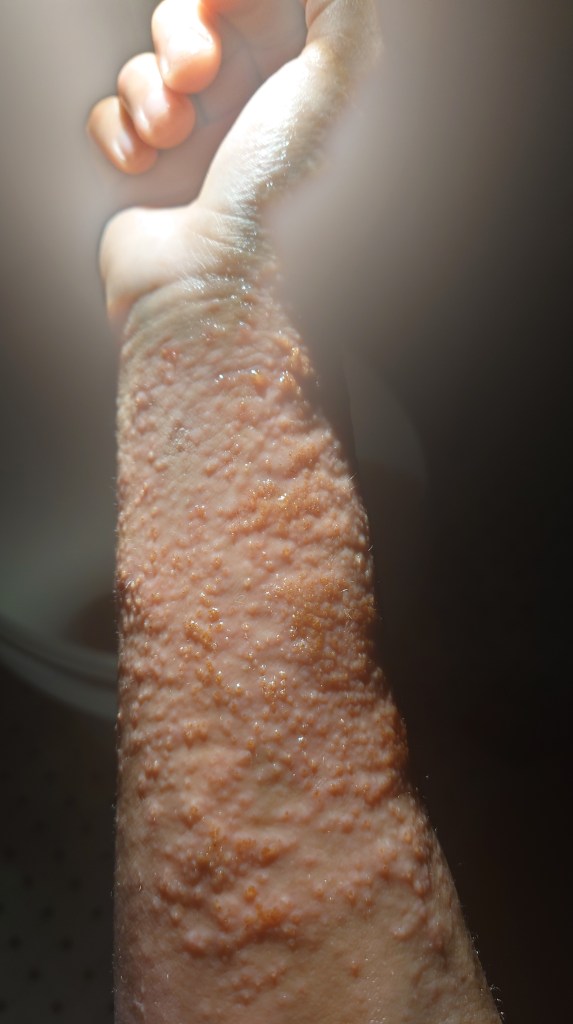
A nutrition‑first (or nutrition‑alongside) pathway aims to address root drivers – gut dysbiosis, systemic inflammation, barrier deficits – so while it demands time and consistency, its typical side effects are favorable (better energy, digestion, sleep, and metabolic markers) compared with the potential harms of over‑reliance on steroids or other drugs. 5, 8
And for psoriasis specifically, emerging randomized data suggest an anti‑inflammatory Mediterranean pattern can reduce lesion severity and improve quality‑of‑life outcomes within 16 weeks, supporting the principle that food is a therapeutic tool, not just fuel. 13
Practical Next Steps
1. Start with knowledge. Read The Healthy Skin Kitchen to build a flexible, nourishing routine; use The Eczema Detox if you suspect chemical sensitivities drive flares (ideally with guidance to avoid nutrient gaps). 10, 16
2. Track, don’t guess. Keep a brief food-symptom-sleep log for 4 to 6 weeks to spot patterns. (Science backs the gut-skin and gut-brain links; your journal personalizes them.) 2, 4
3. Protect sleep like a prescription. Consistent sleep windows, light hygiene, and stress management help lower inflammatory signaling. 6, 7
4. Partner with clinicians. Discuss plans with your dermatologist/GP, especially if you’re on topical steroids, so you can safely taper or co‑manage therapies while you improve diet and lifestyle. 14, 15
Final thoughts
Healing takes patience, but it’s profoundly empowering. By investing in nutrition, sleep, and research‑driven lifestyle changes, you’re not just managing symptoms; you’re rebuilding resilience from the inside out. If you’re unsure where to begin, these Skin Friend books give you a practical, hopeful roadmap for the year ahead.
Reference List
- Micu, A. E., et al. (2025). From gut dysbiosis to skin inflammation in atopic dermatitis: Probiotics and the gut–skin axis—Clinical outcomes and microbiome implications. International Journal of Molecular Sciences, 27(1), 365. https://www.mdpi.com/1422-0067/27/1/365
- Xue, Y., et al. (2023). Gut microbiota and atopic dermatitis: A two-sample Mendelian randomization study. Frontiers in Medicine, 10, 1174331. https://www.frontiersin.org/journals/medicine/articles/10.3389/fmed.2023.1174331/full
- Paz, M., & Lio, P. (2025). Postbiotics and atopic dermatitis: Aiming to modulate the gut–skin axis. Journal of Integrative Dermatology. https://jintegrativederm.org/doi/10.64550/joid.9kv22073
- Shoubridge, A. P., et al. (2022). The gut microbiome and mental health: Advances in research and emerging priorities. Molecular Psychiatry, 27, 1908–1919. https://www.nature.com/articles/s41380-022-01479-w.pdf
- Diotaiuti, P., et al. (2025). The gut microbiome and its impact on mood and decision-making: A mechanistic and therapeutic review. Nutrients, 17(21), 3350. https://www.mdpi.com/2072-6643/17/21/3350
- fzal, U. M., & Ali, F. R. (2023). Sleep deprivation and the skin. Clinical and Experimental Dermatology, 48(10), 1113–1116. https://academic.oup.com/ced/article/48/10/1113/7191992
- Harvard Health Publishing. (2025, December 16). How sleep deprivation can cause inflammation. https://www.health.harvard.edu/healthbeat/how-sleep-deprivation-can-cause-inflammation
- Kwon, I. J., et al. (2025). Independent and combined effects of particulate matter and sleep deprivation on human skin barrier. Annals of Dermatology, 37(3), 131–139. https://anndermatol.org/pdf/10.5021/ad.25.003
- Sadur, A., et al. (2025). The sleep–skin axis: Clinical insights and therapeutic approaches for inflammatory dermatologic conditions. Dermato, 5(3), 13. https://www.mdpi.com/2673-6179/5/3/13
- Bond University Newsroom. (2025, June 11). Clinical trial for eczema sufferers. https://bond.edu.au/news/clinical-trial-for-eczema-sufferers
- Skin Friend. (2025, June 11). Is eczema linked to histamine? https://skinfriend.com/en-au/blogs/news/new-eczema-research-connects-histamine-intolerance-eczema-here-s-what-to-know
- Medscape Medical News. (2025, September 24). Mediterranean diet reduces psoriasis severity in trial. https://www.medscape.com/viewarticle/mediterranean-diet-reduces-psoriasis-severity-trial-2025a1000pjd
- IRYCIS. (2025, December 16). Mediterranean diet and patients with psoriasis: MEDIPSO randomized clinical trial. https://www.irycis.org/en/communication/irycis-outstanding-publication/109/mediterranean-diet-and-patients-with-psoriasis-the-medipso-randomized-clinical-trial
- Medicines and Healthcare products Regulatory Agency. (2021, September 15). Topical steroid withdrawal reactions: A review of the evidence. https://www.gov.uk/government/publications/topical-steroid-withdrawal-reactions-a-review-of-the-evidence
- National Eczema Society, et al. (2024, February). Topical steroid withdrawal—Joint statement. https://eczema.org/wp-content/uploads/Topical_Steroid_Topical_Withdrawal_Joint_Statement_Feb_2024.pdf
- Exisle Publishing. (2021). The healthy skin kitchen. https://exislepublishing.com/product/the-healthy-skin-kitchen/
- Exisle Publishing. (2018). The eczema detox. https://exislepublishing.com/product/eczema-detox/
- Chen, Y., Lyga, J. (2014). Brain–skin connection: Stress, inflammation and skin aging. Inflammation & Allergy – Drug Targets, 13(3), 177–190. https://doi.org/10.2174/1871528113666140522104422
 Artist & Academic